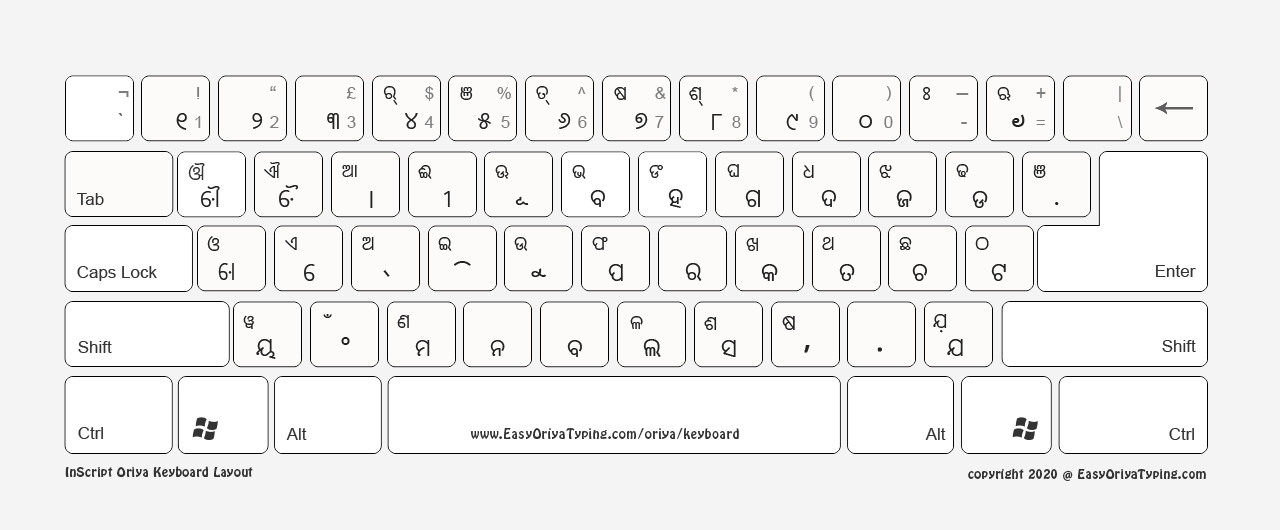
1. Standard Oriya Keyboard Layout
High resolution image suitable for printing.
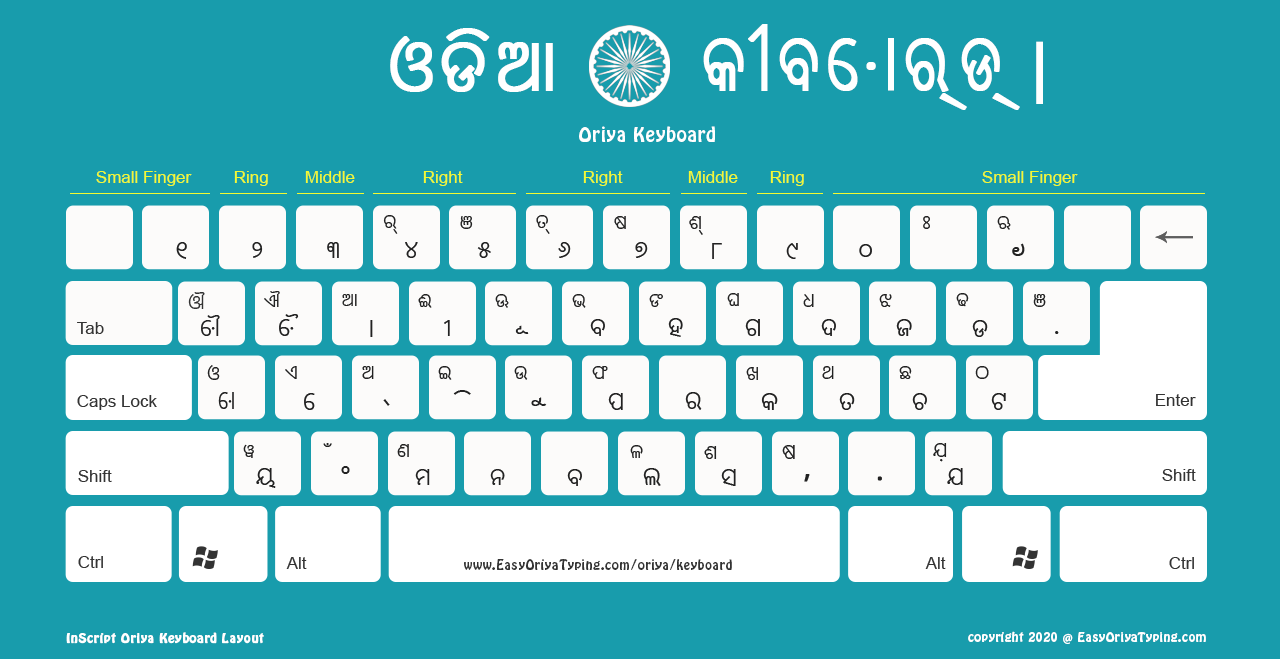
We have five different Oriya keyboard layouts for you to download on your computer. Once downloaded — you can use it as a reference to type in Oriya either on Word document or any other text editor. You also need to download the matching Oriya fonts.
High resolution image suitable for printing.
High resolution image suitable for printing.
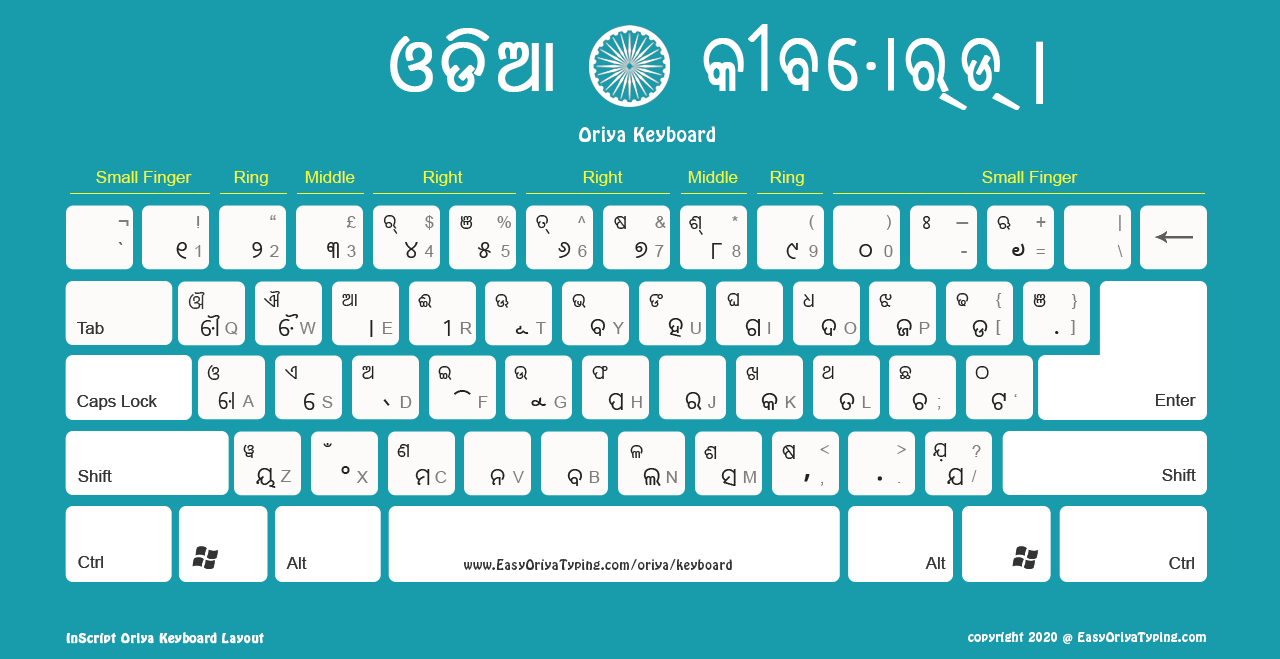
High resolution image suitable for printing.
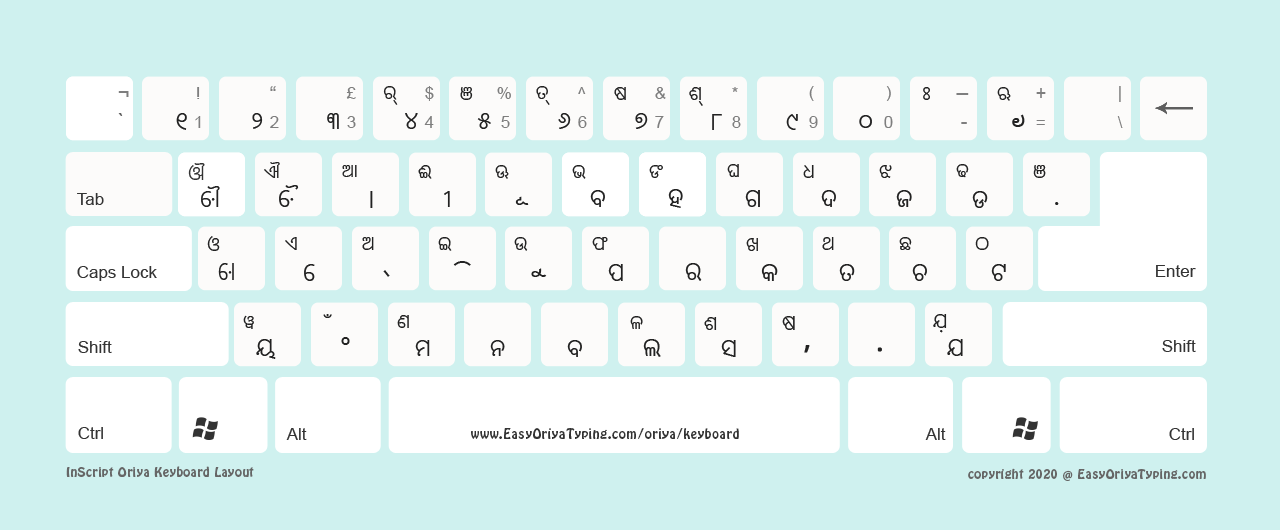
High resolution image suitable for printing.
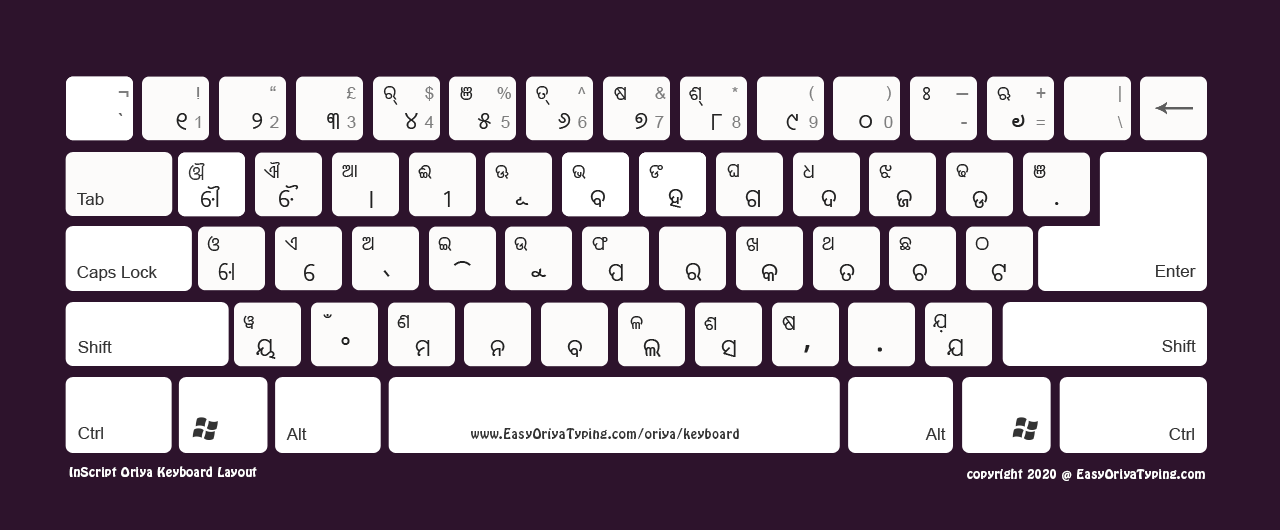
High resolution image suitable for printing.
Getting started with Oriya typing is simple! Follow our step-by-step process.
Install Odia font — head over to our extensive fonts repository and install your preferred typeface.
Download your ideal keyboard image through this simple downloading process:
Browse and click on your preferred keyboard style
Right-click anywhere on the enlarged image
Choose "Save image as..." and pick your storage location
Prepare your writing space by launching your go-to text application and activating the Oriya font you installed in step one.
Begin your Oriya writing journey! Display your keyboard reference image alongside your text editor for seamless typing guidance.
Space-saving tip: Working on a compact setup? Our high-resolution keyboards deliver stunning print quality — create a physical reference that's always within reach!
Ensures traditional accuracy — each layout preserves authentic Oriya script conventions and cultural writing traditions.
Offers complete flexibility — choose from multiple styles and backgrounds to match your personal or professional preferences.
Includes unrestricted usage rights — download, print, share, and modify for any purpose without limitations or hidden costs.
Using an official key ensures you get the latest updates and technical support when you need it most. Option 2: Informational / Help Post
While the search for a free registration key link is motivated by the high stakes of data loss, the risks of using unofficial links far outweigh the benefits. To ensure successful data restoration without compromising system security, users should utilize the official trial to verify data and then proceed with a legitimate license. technical differences diskinternals partition recovery registration key link
| Feature | What it means for you | Why it’s handy | |---------|----------------------|----------------| | | Detects lost, deleted, or corrupted partitions on any storage device (HDD, SSD, USB, SD card, etc.). | Saves time – quick scan gives an instant list of recognizable partitions; full scan digs deeper when needed. | | File‑system support | NTFS, FAT/FAT32, exFAT, ext2/3/4, HFS+, APFS, ReFS, and many more. | You can recover data from Windows, macOS, Linux, and mixed‑OS environments without switching tools. | | Partition preview | Shows a “virtual mount” of the found partition so you can browse folders and view files before committing to recovery. | Lets you verify that the right data is being recovered, avoiding wasted effort. | | Selective recovery | Pick individual files/folders or whole partitions to restore. | You can recover only the needed data, reducing recovery time and storage usage. | | Raw‑mode recovery | Works even when the partition table is completely corrupted or the file system is unrecognizable. | Handles the worst‑case scenarios (e.g., after a virus, bad sector, or accidental format). | | Sector‑by‑sector copy | Creates a forensic‑grade image of the damaged disk before any recovery attempt. | Provides a safety net—if something goes wrong you can start over from the image. | | Unicode & long‑filename support | Handles non‑ASCII characters and file‑paths longer than 255 characters. | Essential for international users or projects with deep folder hierarchies. | | Boot‑sector reconstruction | Rebuilds missing or damaged boot sectors for NTFS, FAT, and other file systems. | Often enough to make a whole partition bootable again. | | Detailed log & report | Generates an HTML/PDF report of the scan results and recovery actions. | Great for documentation, IT audits, or just keeping track of what was salvaged. | Using an official key ensures you get the
: Price available on demand (for data recovery service providers). technical differences | Feature | What it means
To use DiskInternals Partition Recovery without limitations, users need to purchase a registration key. Here's a general outline of the registration process:
 Sambhu Raj Singh ·